Economic Needs Analysis — March 2026

City of Stayton
Economic Needs Analysis

Commercial Property & Hospitality Assessment

Prepared by Brand Land Use Planning
Salem, Oregon
Prepared for Clutch Industries
Chris Blackburn, Principal
Date March 2026
Subject City of Stayton, Oregon
Marion County

The Opportunity Gap

"Stayton, Oregon sits at the doorstep of one of the state's most visited natural attractions — yet captures almost none of the economic value that 1.6 million annual visitors generate."
ZERO
Hotels or Motels
Within city limits. Stayton is the only gateway community to a top-3 Oregon state park with no lodging infrastructure.
21
Vacant Buildable Acres
Total vacant buildable commercial land inside city limits. The City's own growth projections require 37–44 acres — a structural deficit with no UGB expansion planned.
1.58M
Day-Use Visits — 2024
Silver Falls State Park visits in 2024 — a record. The corridor generates 2+ million total recreation visits annually.

This analysis, drawing on the City's adopted Comprehensive Plan, Buildable Lands Inventory, 2019 Economic Development Strategy, Census data, and state tourism metrics, identifies critical gaps in commercial property supply and hospitality infrastructure that constrain Stayton's economic potential.

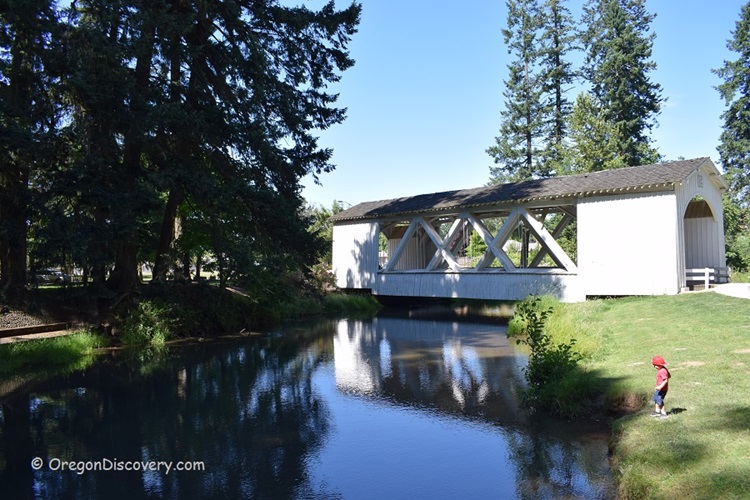
The Stayton-Jordan Covered Bridge spanning a river in a forested setting
The Stayton-Jordan Covered Bridge — one of Stayton's iconic landmarks

Population & Economic Profile

Stayton, Oregon — Population Trends by Decade
Year Population Change % Change
19905,011
20006,816+1,805+36.0%
20107,644+828+12.1%
20208,244+600+7.8%
2024 (est.)8,521+277+3.4%
2030 (proj.)~11,360

Buildable Lands — The Constraint

"The land supply cannot meet projected demand."
City of Stayton — Commercial Buildable Lands Inventory (Inside City Limits)
Zone Description Gross Acres Net Acres Vacant Buildable
CRRetail Commercial34259
CGGeneral Commercial75596
IDInterchange District864
CCMUCore Commercial Mixed Use850
DCMUDowntown Commercial Mixed Use531
DRMUDowntown Residential Mixed Use22131
TOTAL15211121
Average vacant parcel: 0.5 acres
The Comprehensive Plan states: "Interested merchants or developers have, in recent years noted a lack of medium sized vacant lots available for commercial uses."
Downtown vacancy is near zero
Only 2 acres remain in all three downtown zones combined. The CCMU zone has essentially zero vacant buildable land.
No UGB expansion planned
The Comprehensive Plan states: "No change in the Urban Growth Boundary is proposed."
Structural deficit
Projected 20-year demand of 37–44 acres exceeds the current supply of 25–27 net acres — a gap of 12–19 acres with no clear resolution path.

The Hospitality Gap

"Stayton has no hotel. The data says it needs one."

"Stayton does not have a hotel."

— 2019 Economic Development Strategy, Policy Advisory Committee

Lodging Supply Within 15 Miles of Stayton, Oregon
Property Type Rooms Location Rate/Night
Bird & Hat InnB&B3Stayton$80–$120
Gardner House B&BB&B1 cottageStayton$110–$140
Bridgeway InnMotel50Sublimity (4 mi)$74–$97
Smith Creek VillageCabins19Silver Falls (15 mi)$129–$182
Oregon Garden ResortResort103Silverton (10 mi)$129–$200
62%
STR Occupancy Rate
$145
Average Daily Rate
<$1
TOT Revenue / Capita
$249
Oregon City Avg TOT / Capita
20+ mi
To Nearest Branded Hotel

STR occupancy at 62% exceeds the Oregon statewide average of 57%, confirming demand is present. The community captures less than $1 per capita in transient occupancy tax revenue, compared to a statewide Oregon city average of $249 per capita.
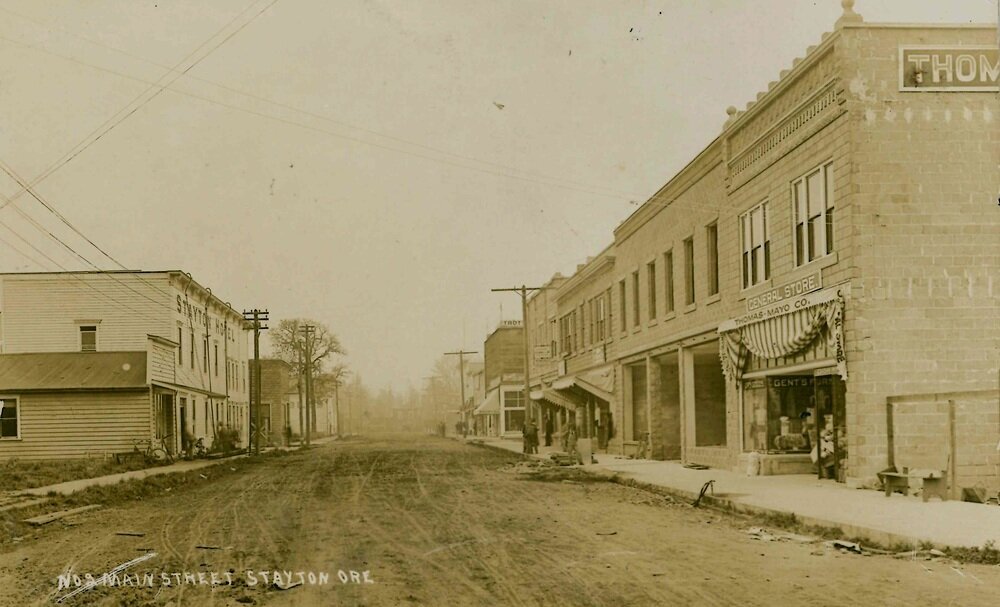
Street view of downtown Stayton, Oregon showing commercial storefronts
Downtown Stayton — limited commercial vacancy constrains growth

Tourism Demand

Silver Falls State Park

  • 1,579,700 day-use visits in 2024 — a record
  • 3rd highest visitation of all Oregon state parks
  • Visitation has roughly tripled over 20 years

North Santiam Corridor

  • 500,000+ annual visits to public lands
  • Recreation consumer surplus: $36.5M/year
  • Highway 22 traffic: 14,000–17,000+ vehicles/day

Regional Economic Impact

  • Marion/Polk County visitor spending: $750M+ (2024)
  • 7,700+ tourism-generated jobs
  • Oregon statewide tourism: $14.3B direct spending (2024)
~240
Current Rooms (Corridor)
~580
Estimated Need
~340
Room Gap at 72% Occupancy

Gap Analysis Summary

Stayton Economic Gap Analysis — Current Supply vs. Estimated Need
Category Current Supply Estimated Need Gap Severity
Buildable Commercial Land ~25 net acres 37–44 acres (20-yr) 12–19 acres Moderate
Hotel/Motel Rooms (City) 0 rooms 70–100 rooms (min) 70–100 rooms Critical
Hotel/Motel Rooms (Corridor) ~240 rooms ~580 rooms ~340 rooms Severe
Downtown Buildable Land 2 acres 5–8 acres 3–6 acres Moderate–High
Sit-Down Dining ~25 establishments 35–40 10–15 Moderate
Specialty/Tourism Retail Near zero 5–10 5–10 High

The Data Is Clear

Stayton needs more commercial property.

The City's adopted inventory shows only 21 buildable acres against projected demand of 37–44 acres, with no UGB expansion planned.

The hospitality gap is severe and immediate.

Zero hotels in a gateway community to Oregon's 3rd most-visited state park represents a market failure, not a lack of demand — confirmed by 62% STR occupancy exceeding the statewide average.

Tourism revenue is leaving the community.

The corridor generates 2+ million annual recreation visits, yet Stayton captures less than $1 per capita in transient occupancy tax compared to the $249 statewide average.

Recommendations

Tier 1 High Priority
A
Branded Mid-Scale Hotel (70–100 Rooms)
Silver Falls / Santiam Canyon basecamp. Addresses the critical hospitality gap and captures transient occupancy tax revenue currently lost to neighboring communities.
B
Mid-Upscale Restaurant
#1 community request in the 2019 Economic Development Strategy. Serves both the resident workforce and the 1.5M+ annual visitors to Silver Falls.
C
Outdoor Recreation / Adventure Retail
No gear shop exists between Salem and Bend along Highway 22. High capture potential from day-hikers, cyclists, and campers transiting the corridor.
Tier 2 Medium Priority
D
Mixed-Use Downtown Infill
Maximize the limited downtown commercial land through vertical development combining ground-floor retail with upper-floor residential or office.
E
Specialty Grocery / Local Food Hub
Serves the growing resident base and supports culinary tourism aligned with the Willamette Valley wine and food corridor.
Tier 3 Policy Actions
F
Urban Renewal District Establishment
Create a formal URD to unlock tax increment financing for infrastructure and public improvements that enable private investment.
G
Updated Buildable Lands Inventory
Conduct a current-conditions BLI to identify potential infill, redevelopment parcels, and opportunities for zone amendments.
H
Hotel Feasibility Study
Commission a formal hotel market analysis to quantify supportable rooms, identify branded flag partnerships, and attract developer interest.

Sources & References

  1. City of Stayton Comprehensive Plan (amended 2021)
  2. City of Stayton Economic Development Strategy (2019)
  3. City of Stayton FY2023–24 Adopted Budget
  4. U.S. Census Bureau QuickFacts — Stayton City, Oregon
  5. ODOT Downtown Stayton Transportation Plan (2007)
  6. TripAdvisor — Hotels in Stayton, Oregon
  7. AirDNA — Stayton Short-Term Rental Market Data
  8. League of Oregon Cities — Transient Lodging Tax Survey (2024)
  9. Canyon Weekly / OPRD — State Parks Visitation 2024–2025
  10. ECONorthwest — North Santiam Watershed Economic Analysis (2019)
  11. Travel Oregon — 2024 Economic Impact of Tourism Report
  12. LoopNet — Retail Space for Lease, Stayton, Oregon
  13. Bridge Economic Development Technical Analyses (2019)